Abstract
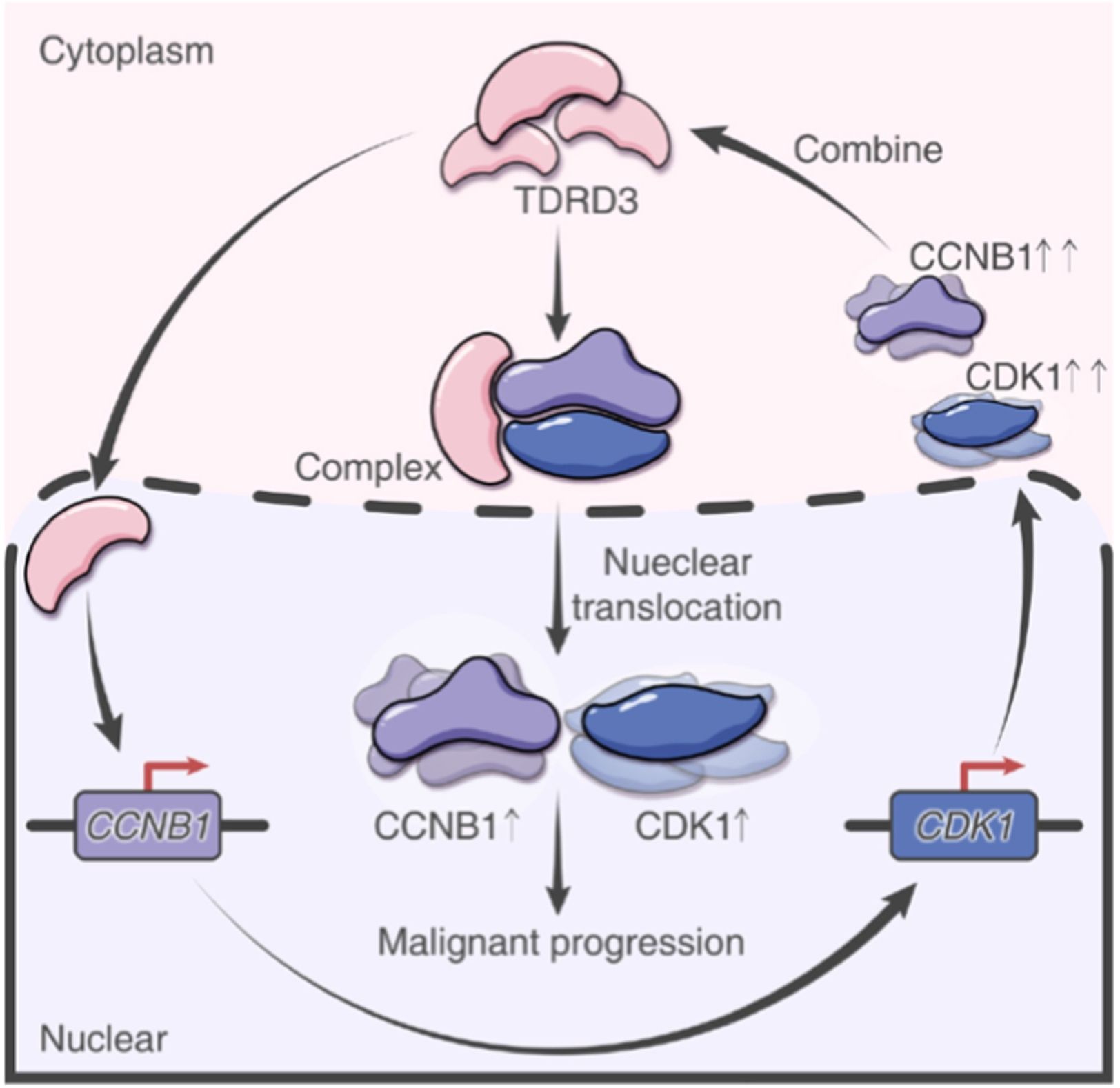
Melanoma shows strong variability between tumor cells, and understanding its drivers of malignant progression is essential for developing better treatment options. Single-cell RNA sequencing offers an opportunity to characterize this cellular diversity at high resolution. In this study, we evaluated publicly available single-cell data from untreated melanoma to explore the cellular landscape and uncover key contributors to disease progression. We discovered a specific tumor cell subpopulation associated with worse patient outcomes. Through gene expression and regulatory analyses, TDRD3 emerged as a molecule highly expressed in melanoma and linked to advanced clinical features. Functional studies confirmed its role in tumor progression, showing that silencing TDRD3 reduced melanoma cell growth, colony formation, and invasion, whereas its overexpression enhanced these malignant properties. Further experiments revealed that TDRD3 promotes cell cycle progression by modulating the CCNB1/CDK1 pathway and supports the nuclear localization of these proteins. To evaluate the therapeutic relevance of TDRD3 inhibition, we designed a biomimetic nanomedicine loaded with TDRD3-specific siRNA, which potently impeded melanoma cell growth. Overall, our findings establish TDRD3 as a key regulator of melanoma progression and underscore its potential as a therapeutic target.
文章链接:https://doi.org/10.1016/j.mtadv.2026.100714