Abstract
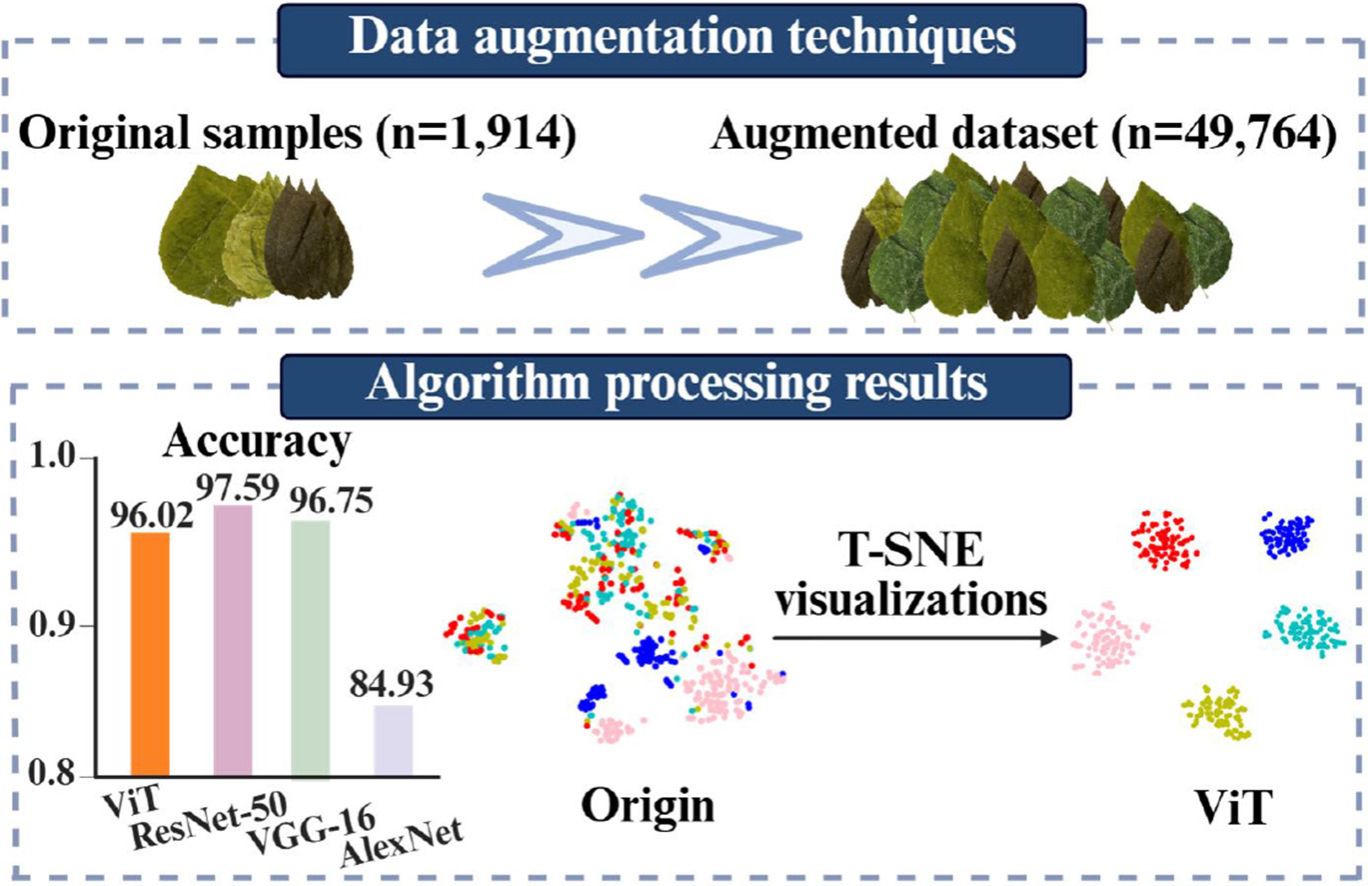
Epimedii Folium (E-F) displays remarkable interspecific diversity in bioactive composition, and adulteration in the herbal market frequently compromises its therapeutic reliability and safety. Establishing a rapid, non-destructive, and accurate identification strategy is therefore of critical importance. In this study, a comprehensive image dataset comprising 1914 leaf samples was constructed, with taxonomic standards developed under the guidance of Professor Baolin Guo, a leading authority in Epimedium taxonomy, who verified representative specimens to ensure labeling accuracy. Four deep learning architectures, including VGG16, ResNet50, AlexNet, and ViT, were rigorously evaluated through 5-fold cross-validation. ViT and ResNet50 achieved the most robust performance, demonstrating outstanding capability in distinguishing fine-grained morphological features. Compared with ultraviolet and near-infrared imaging, which were severely affected by chlorophyll interference, visible-light imaging combined with deep learning provided superior precision, efficiency, and stability. This work establishes a powerful framework for intelligent and non-invasive authentication of E-F, advancing quality assurance and promoting the modernization of traditional Chinese medicine.
文章链接:https://doi.org/10.1016/j.cclet.2026.112420