Abstract
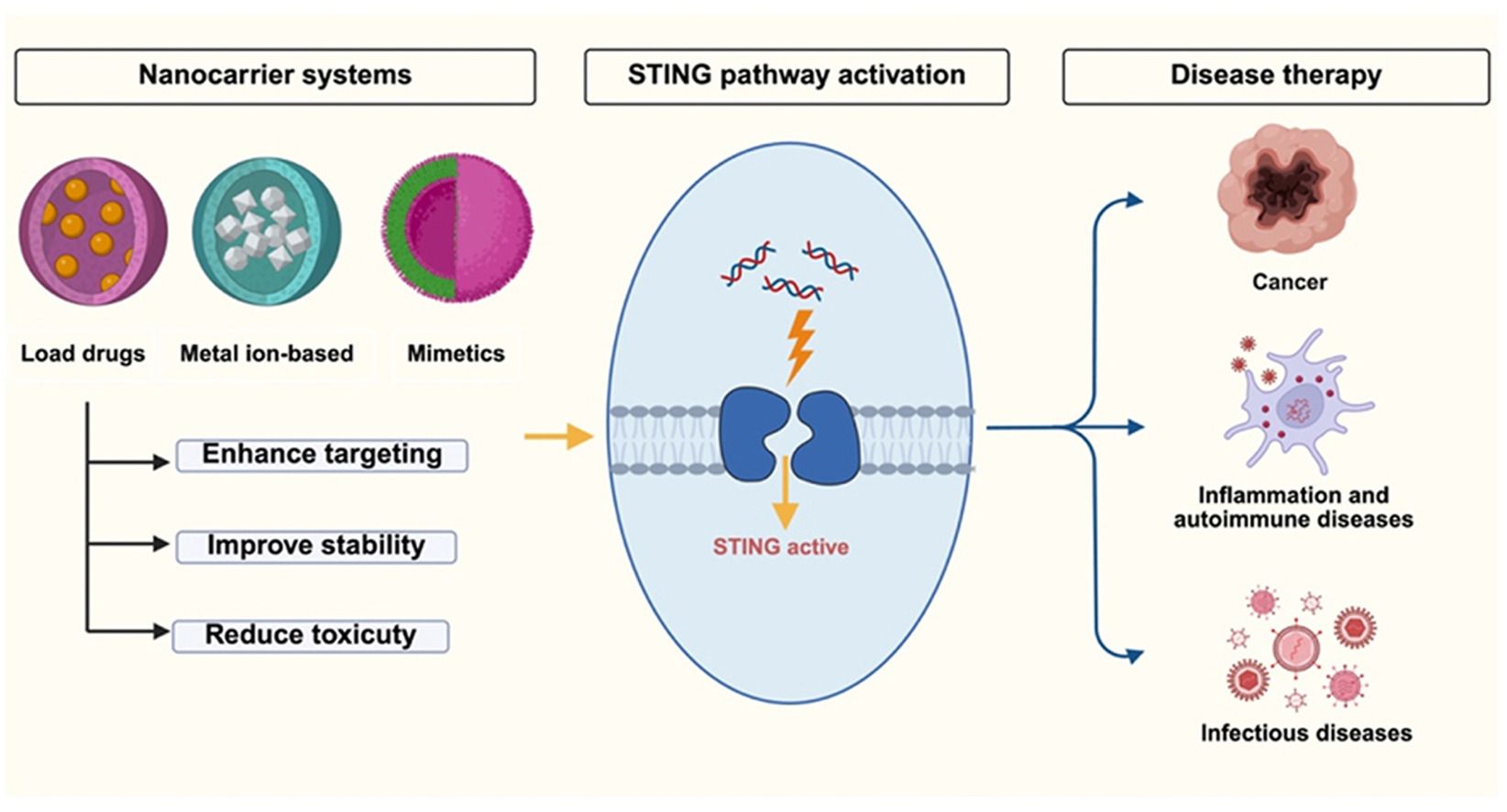
The combination of cyclic GMP–AMP synthase (cGAS)-stimulator of interferon genes (STING) signaling pathway modulation with nanotechnology offers a promising strategy for the development of more effective and less toxic therapies. This review summarizes the latest clinical progress of STING agonists and inhibitors, with a particular focus on the role of nanomaterials in regulating the cGAS–STING pathway across a range of diseases. In oncology, STING activation enhances anti-tumor immunity by stimulating immune cells, while nanocarriers improve the stability and targeting precision of STING agonists, facilitating synergistic effects with other immunotherapies. In inflammatory and autoimmune diseases, regulating STING activation helps alleviate the production of excessive pro-inflammatory cytokines, restore immune homeostasis, and prevent tissue damage. Nanomaterials, such as cell-derived membranes, further enhance targeted delivery and biocompatibility, addressing key limitations of existing treatment strategies. What distinguishes this review is an in-depth analysis of the current clinical progress of STING agonists and inhibitors, providing a comprehensive overview of both ongoing clinical trials and preclinical advancements. We also critically evaluate the specific challenges encountered in translating STING nanomaterials into clinical practice. These challenges present significant barriers to the widespread application of STING-based therapies, underscoring the need for further optimization to realize their full potential.
文章链接:https://doi.org/10.1016/j.apsb.2026.02.005