Abstract
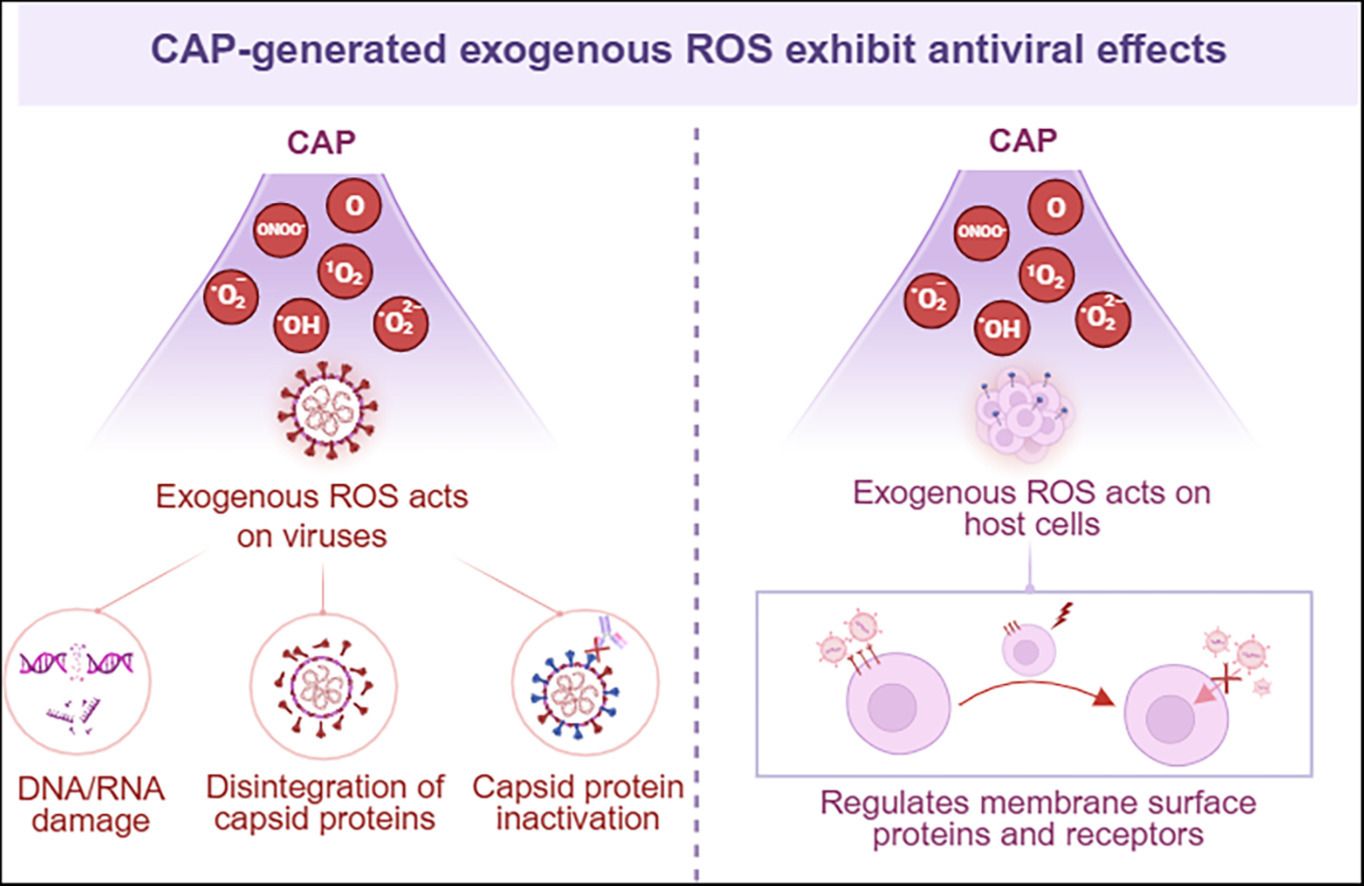
In the post-pandemic era, driven by the emergence of new pathogens and the acceleration of global communication, the need for innovative antiviral strategies has become more urgent. Conventional physical methods, such as UV irradiation, microwaves, and steam, face challenges including limited penetration, thermal damage, and low energy efficiency. Cold atmospheric plasma (CAP) is a safe, eco-friendly, and effective antiviral strategy that has demonstrated powerful and rapid disinfection capabilities, especially during the corona virus disease 2019 (COVID-19) pandemic. This review systematically summarizes CAP's broad-spectrum antiviral applications. CAP effectively inactivates viruses like severe acute respiratory syndrome coronavirus 2 (SARS-CoV-2), adenovirus, and human immunodeficiency virus (HIV) through direct exposure or plasma activating medium (PAM). Mechanistically, reactive oxygen species (ROS) display dual roles: CAP-generated exogenous ROS inactivates viruses, while endogenous ROS, under specific conditions, may promote viral replication via mitochondrial damage, endoplasmic reticulum stress, and endosome formation. Precise ROS regulation is crucial to avoid unintended cellular effects. Standardized applications and a deeper understanding of CAP's mechanisms are key to unlocking its full clinical potential.
文章链接:https://doi.org/10.1016/j.cclet.2026.112444