Abstract
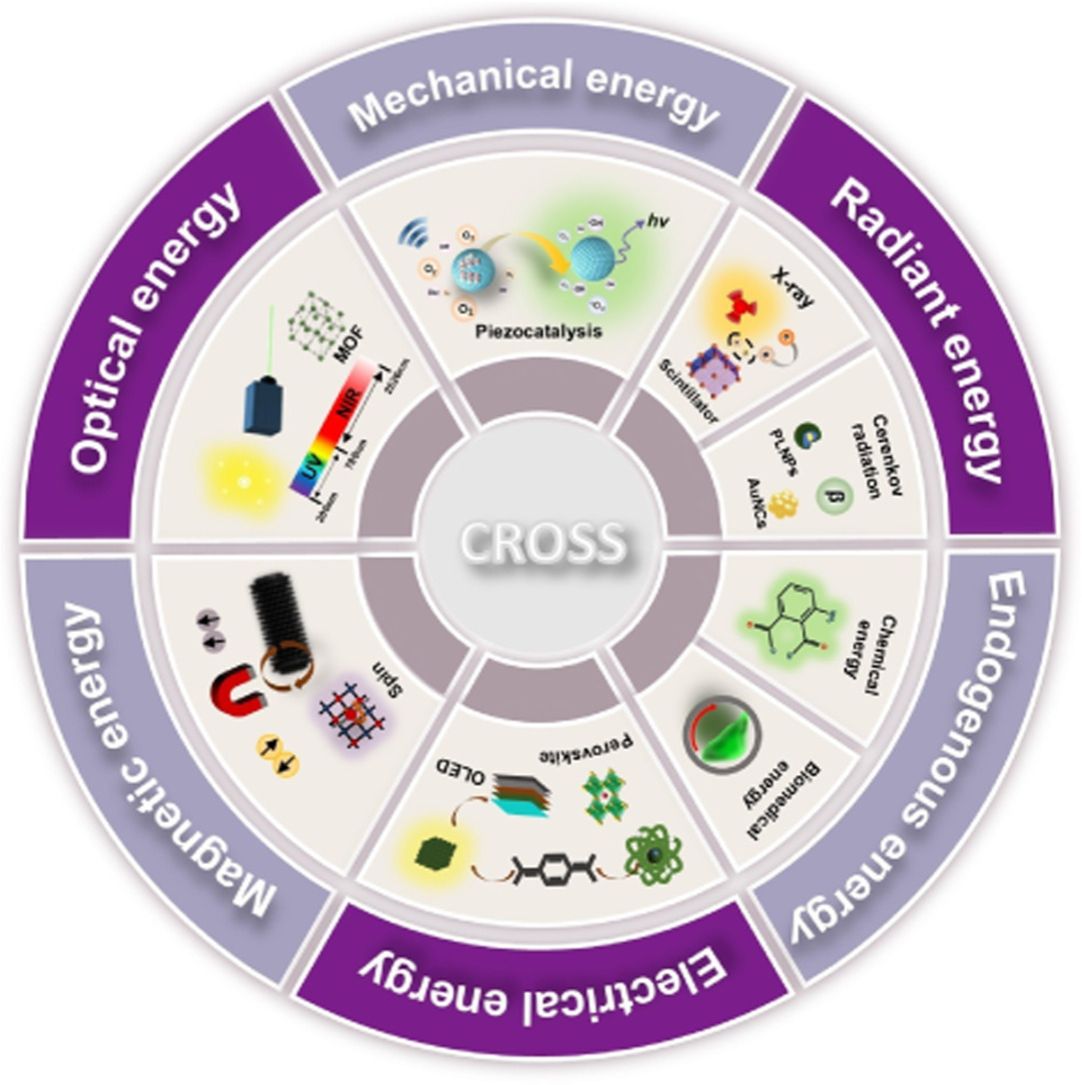
As a technique with high sensitivity and resolution, fluorescence imaging is widely used in biomedical research, disease diagnosis and environmental monitoring, etc. Traditional fluorescence imaging mostly relies on photoexcitation paradigms, but with the deepening of multidisciplinary cross research, fluorescence excitation strategies based on multiple energy sources have gradually become an emerging frontier. These innovative strategies achieve diversified excitation of fluorescent probes by using multiple external stimuli, such as electric energy, magnetic energy, chemical energy, electromagnetic radiation, optical energy and mechanical energy, providing more flexible choices for different application scenarios, which not only broaden the application scope of fluorescence technology but also provide a new way of thinking for the design of highly efficient and tunable fluorescence systems. To track the latest advancements in fluorescence excitation techniques, this review systematically summarizes the recent multiple energy sources, focusing on their mechanisms, design principles, application prospects and challenges. By synthesizing recent research progress, this work aims to highlight emerging excitation strategies and offer valuable insights for developing next-generation fluorescent probes and broadening the technological applications of fluorescence-based systems.
文章链接:https://doi.org/10.1016/j.cclet.2025.111552