Abstract
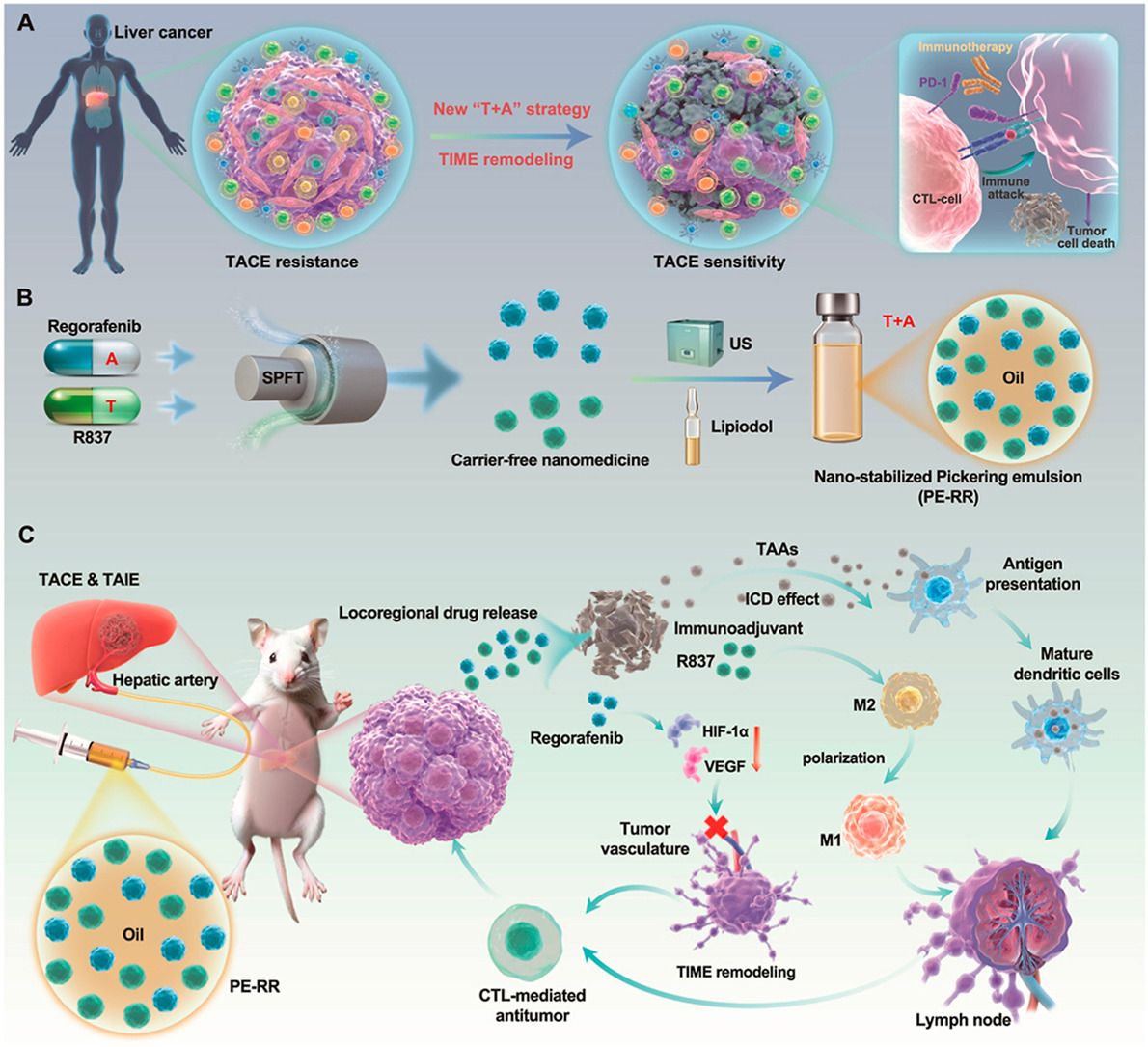
Transarterial chemoembolization (TACE) is hindered by the instability of embolic agents, as well as the tumor microenvironment post-embolization, which is characterized by angiogenesis and immune tolerance. Here, we identify a coupled angiogenesis-immune tolerance axis as a key mechanism underlying post-TACE therapeutic resistance. In this study, we developed a novel combination formulation of regorafenib and R837 designed to reprogram the tumor microenvironment following embolization. Using a supercritical carbon dioxide-assisted method, we successfully synthesized carrier-free pure drug nanoparticles of regorafenib and R837, achieving nanoparticles-stabilized lipiodol Pickering emulsions (PE-RR) preparation. This stable formulation not only significantly enhances the embolic stability and sustained drug release, but also effectively reverses post-embolization hypoxia, angiogenesis and immune tolerance through the therapeutic combination of regorafenib and R837. This study demonstrated that locoregional therapy with PE-RR significantly suppressed the hypoxia-angiogenesis signaling axis. These effects are mediated by the coordinated inhibition of angiogenesis (HIF-1α/VEGF axis) and activation of anti-tumor immunity, establishing a mechanistic linkage between vascular normalization and immune reprogramming. By strengthening antigen release and localized delivery of immune agonists, PE-RR facilitated anti-tumor immune activation and improved the therapeutic response to embolization, overcoming the adverse tumor microenvironment associated with conventional lipiodol embolization. Additionally, in bilateral tumor models, PE-RR could boost the therapeutic efficacy of PD-1 checkpoint blockade, increase the generation of anti-tumor immune memory and minimize the low responsiveness of immune checkpoint inhibitors in liver cancer. The stable Pickering embolic emulsion offers an innovative approach for the clinical translation of embolization therapy.
文章链接:https://doi.org/10.1016/j.biomaterials.2026.124317