Abstract
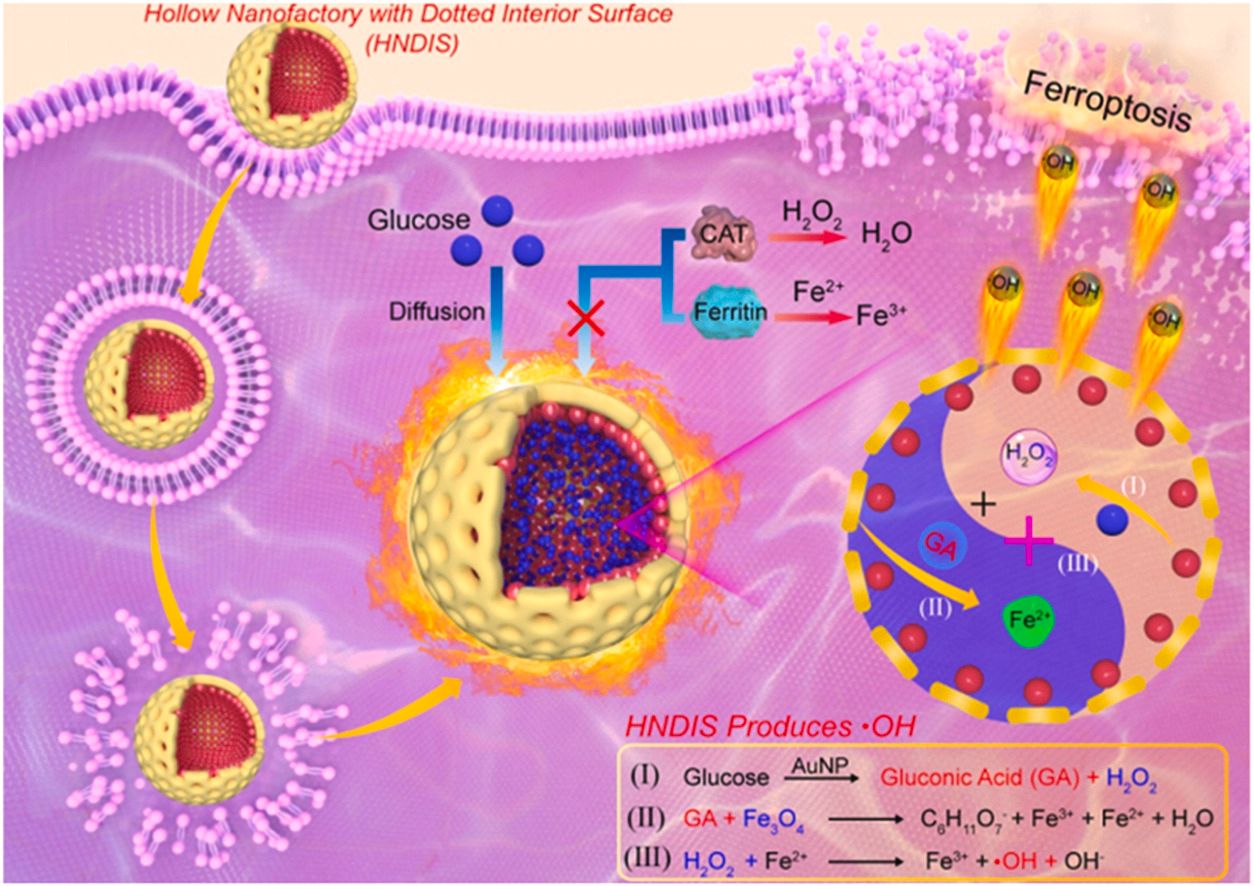
Ferroptosis, a novel form of programmed cell death, is highly dependent on intracellular hydrogen peroxide (H2O2) and Fe2+ levels. Numerous nanomaterials have been developed to co-deliver H2O2 and Fe2+ or their prodrugs into tumor cells, aiming to enhance hydroxyl radical (•OH) level via Fenton reaction. However, the •OH generation efficacy is frequently undermined by catalase (CAT) and ferritin in cytoplasm, which can respectively catalyze H2O2 to H2O and oxidize Fe2+ to Fe3+. Herein, we designed and constructed a hollow nanofactory with dotted interior surface (HNDIS), which is composed of hollow mesoporous iron oxide nanoparticle (HMION, “house” of the nanofactory) with mesoporous channels (“window” of the nanofactory), and ultrasmall gold nanoparticles (AuNP) on the interior surface (“machine” of the nanofactory). The unique “window” allows pass for glucose to co-work with AuNP and HMION to drive H2O2 production and Fe2+ release, and then generate a huge amount of •OH. Macromolecules cannot pass through the “window”, which prevents the undesirable catalysis of ferritin and CAT. In vitro and in vivo experiments have demonstrated potent •OH production ability and powerful tumor suppression efficacy based on ferroptosis for HNDIS, offering a promising pathway to combat drug-resistant large tumors.
文章链接:https://doi.org/10.1016/j.mtbio.2026.102859