Abstract
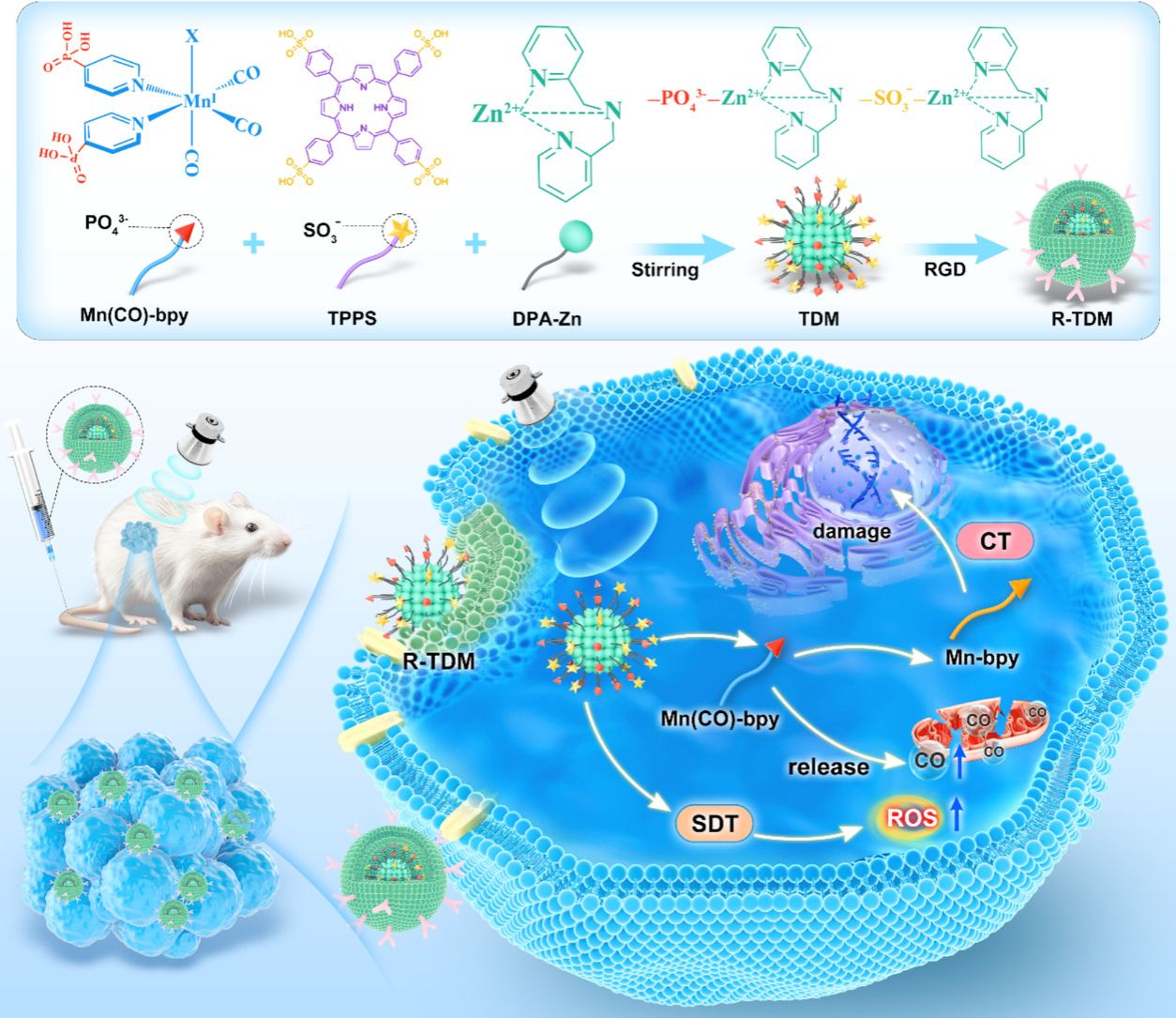
In recent years, issues such as heterogeneity, drug resistance, recurrence and metastasis, as well as the side effects of treatment have made breast cancer treatment complex and challenging. To fulfill the pressing demand for efficient sonodynamic therapy (SDT), a strategy was devised to combine carbon monoxide with chemotherapeutic agents, resulting in a novel sonotherapy agent. This study introduces a new type of porphyrin-based nano-sonosensitizer, R-TDM, synthesized through coordination chemistry. The coordination nanoparticles, facilitate fluorescence (FL) and magnetic resonance imaging, enhancing dynamic treatment by increasing reactive oxygen species (ROS) production and allowing controlled release of carbon monoxide (CO) under ultrasound stimulation. More importantly, concomitant with the release of CO, the in-situ derived novel chemotherapeutic agent, Mn-bpy, will further damage the DNA of tumor cells, enabling sustained chemotherapy (CT) post-ultrasound. Furthermore, the cell membrane coating, modified with the Arg-Gly-Asp peptide (RGD), actively targets tumor sites while improving biocompatibility. This innovation paves the way for the development of multifunctional sonotherapy diagnostics, addressing the clinical challenges associated with SDT.
文章链接:https://doi.org/10.1016/j.cej.2025.166106