Abstract
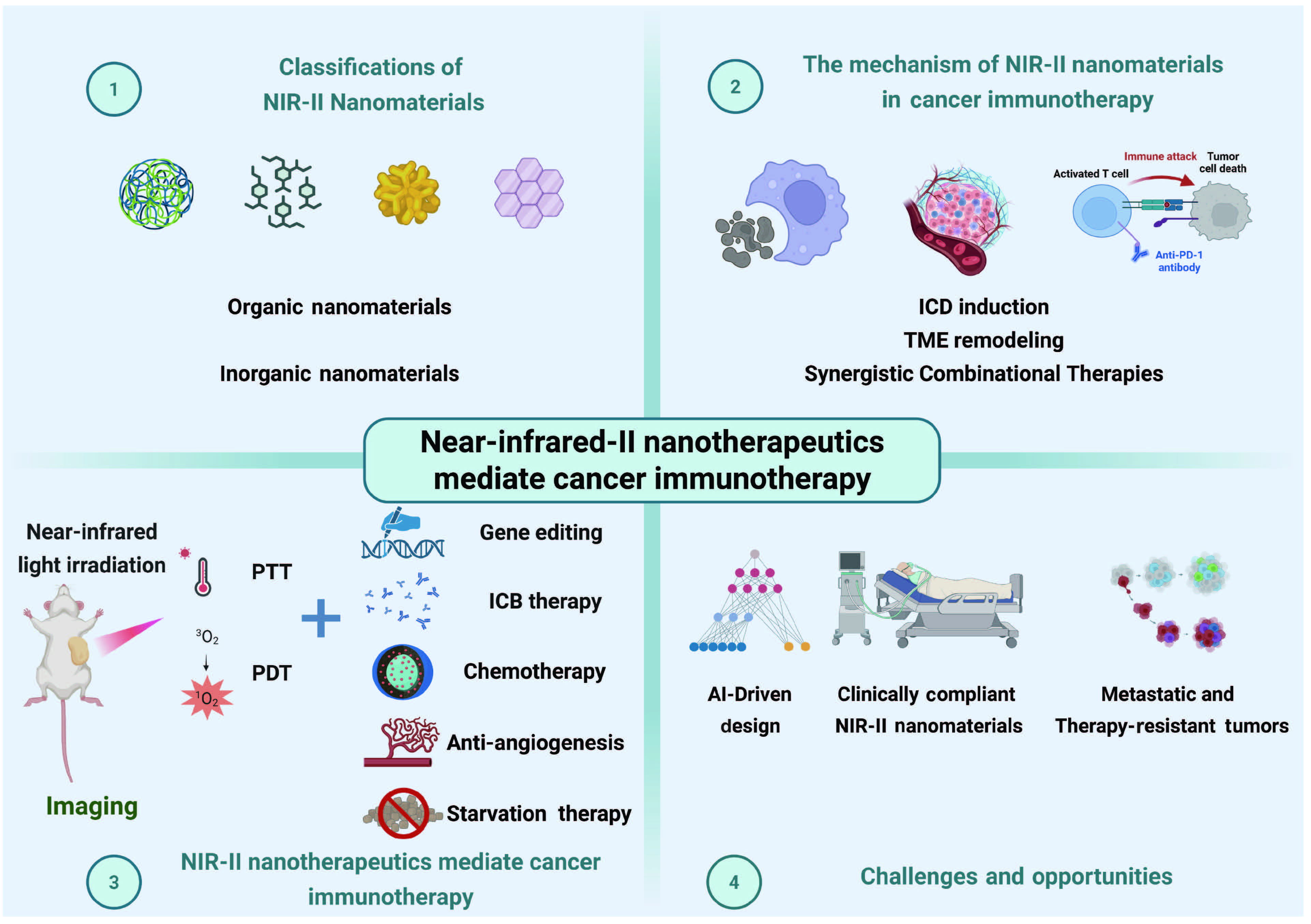
Near-infrared-II (NIR-II) nanotherapeutics are emerging as a priority in cancer immunotherapy due to their unique ability to integrate precise tumor targeting, deep-tissue therapeutic activation, and immune modulation within a single platform. Their superior optical properties, including deep penetration, low autofluorescence, and minimal scattering, enable spatiotemporally controlled photothermal or photodynamic therapy while minimizing off-target toxicity. More importantly, NIR-II nanotherapeutics go beyond tumor ablation by actively reprogramming the immunosuppressive tumor microenvironment, inducing immunogenic cell death, and enhancing the efficacy of immune checkpoint blockade. Recent advances in organic, inorganic, and hybrid nanomaterials have enabled multifunctional systems capable of combining imaging, immune activation, and drug delivery with high precision. Despite significant progress, challenges such as limited penetration depth in larger tumors and potential toxicity remain key barriers to clinical translation. This review comprehensively examines the current state of NIR-II nanotherapeutics, highlighting their mechanisms of action, preclinical successes, and translational challenges. Finally, it further explores emerging opportunities, such as artificial intelligence-driven material design and expanded applications in metastatic and therapy-resistant cancers, positioning NIR-II nanotherapeutics as a promising frontier in cancer immunotherapy.
文章链接:https://doi.org/10.3724/PXLIFE.2025-0013